
Jesse Hartley designed this dock to be fireproof rather than handsome: brick, stone and cast iron, with no structural timber anywhere a spark could reach. The severity suits October, when the water in the basin goes the colour of slate and the 1846 brickwork turns almost purple in the rain. It is also the month when half this waterfront changes its opening hours, so here the plan matters more than the mood.
What you are looking at
Royal Albert Dock Liverpool (the waterfront, a few minutes south of the Pier Head) is a rectangle of tidal water ringed by warehouse blocks, opened in 1846 to Hartley's design. It was Britain's first non-combustible warehouse system, and it is now the largest single group of Grade I listed buildings in the UK. The cast iron colonnade along the quay is the detail everyone photographs without quite knowing why: the columns are hollow and absurdly fat at the base, and they hold four storeys of loaded warehouse above a quayside where ships once unloaded under cover, out of the weather. Stand under them in rain and the engineering makes immediate sense.
The full quayside loop takes about 25 minutes at a stroll, 40 if you stop to read anything. None of it costs a penny. There is no gate, no ticket and no door policy on the estate itself. Coach parties, school groups and stag and hen groups wander the quaysides as freely as anyone, and only the individual venues inside the blocks set their own rules. In October the water is often flat enough to mirror the brick, which is the best argument for arriving early rather than at lunchtime.
What is open here and what is dark
Work out what is shut before you build a day around the dock. Warehouse Block D has been closed since January 2025 for redevelopment, and the Merseyside Maritime Museum and the International Slavery Museum are both inside it. Neither is expected back before 2028. Separately, the Tate's own dock building is a building site until 2027 while a £29.7m rebuild goes on. If you came for those three, the dock in 2026 is a shorter visit than the guidebooks imply.
The gallery itself has not gone anywhere. Tate Liverpool + RIBA North (Mann Island, five minutes' walk north) is open and free to walk into, with no ticket and no group limit, though the temporary floorplate is small, so a party of thirty should split into waves rather than arrive as one block. The photography show 'Wide-Angle View' runs to 1 November 2026, and the venue closes for staff training on 17 November 2026.

Museum of Liverpool (Pier Head) is where I would send anyone who turned up for the Maritime Museum. It is free, needs no booking for general entry, and is open Tuesday to Sunday 10am to 5pm, closed Mondays outside bank holidays and local school holidays. Some temporary exhibitions run to around £12 for an adult. It is fully step-free with lifts to all floors, which makes it the easiest stop on the whole waterfront for a group with mixed mobility, and the Liverpool Overhead Railway carriage parked inside is worth the walk on its own. If you are stitching together a longer trip, the Liverpool guide covers the city centre beyond the water.

The quiet hour before the dock fills
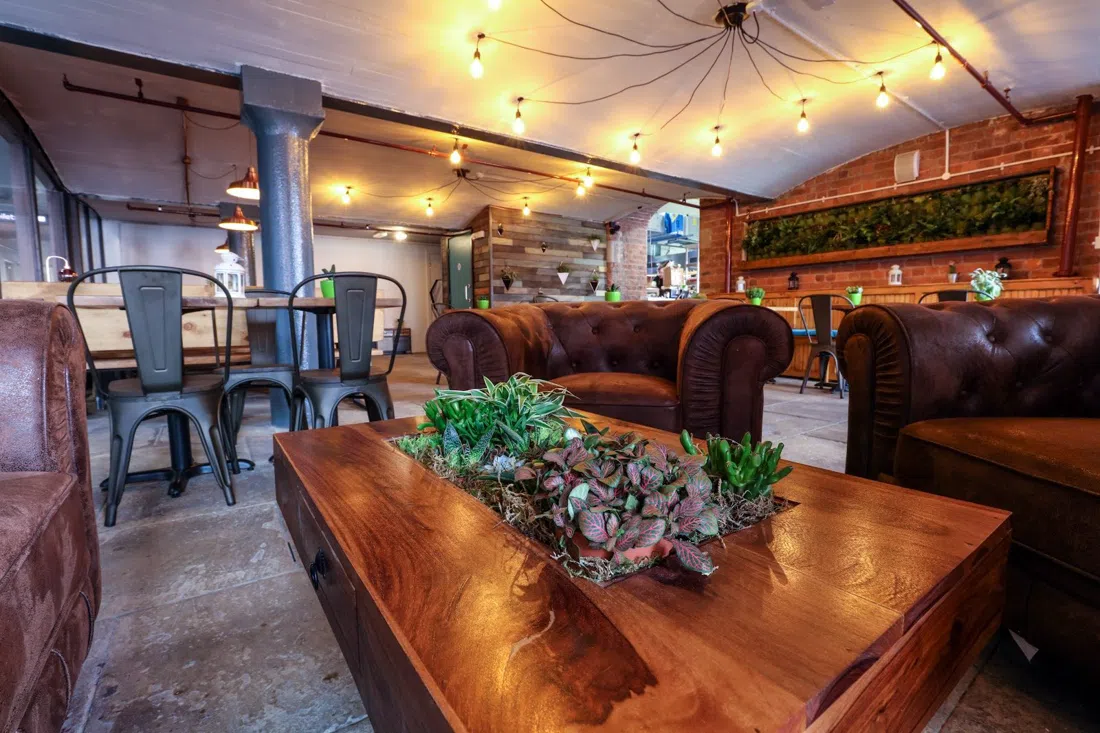
Peaberry Coffee House & Kitchen (the Colonnades, Units 1 and 2a, inside the dock) opens at 9am on weekdays with later weekend hours, and it is the practical reason to be here early. It is a small independent: fine for a few people, not built for a coach party, walk-in only, cheap.
A workable first two hours: coffee by a quarter past nine, then walk the quaysides anticlockwise with the colonnade on your right, which takes 20 to 30 minutes with photographs. Cross the swing bridge at the north-west corner and you are at Mann Island in another three minutes, with the gallery and the photography room both free. From there it is five minutes along the river wall to the Pier Head and the Three Graces. You will have seen the best of the architecture before the first group arrives, and before 10am in October you will often have the north quay to yourself.
Two ways to get above the water
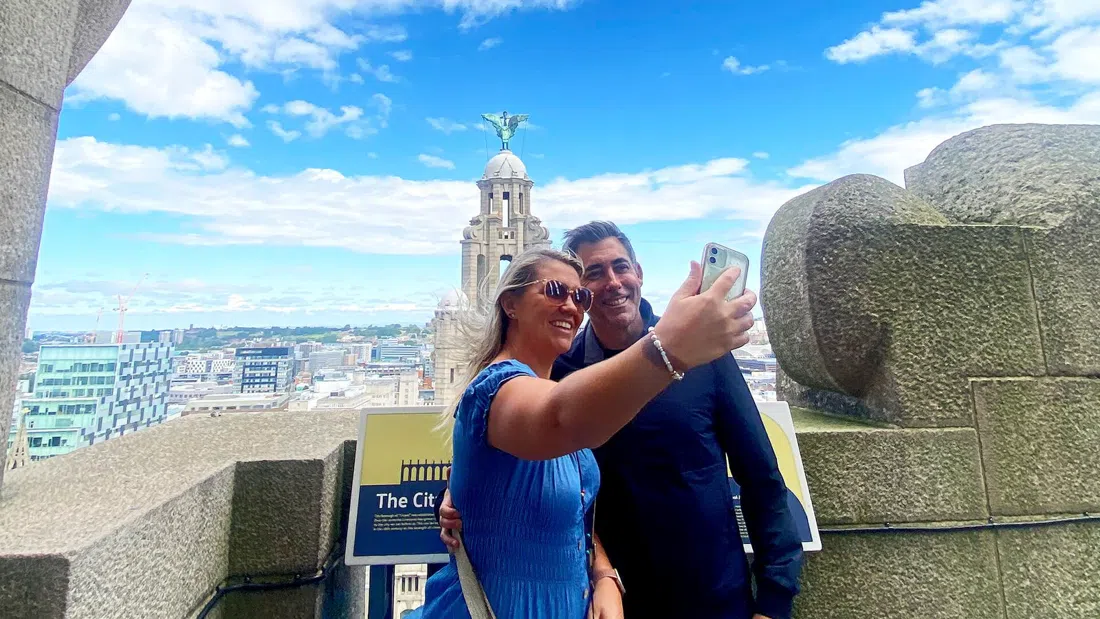
Royal Liver Building 360 (Pier Head) is where you get the photograph. Tickets are £18.50 for an adult and £13 for a child aged 5 to 15, with under-5s not admitted at all, a £1.75 online booking fee, and a £2 option for the visitor centre alone. Budget 70 minutes for the tour plus about half an hour downstairs. It is 124 stairs with no lift, and the hours shift with the season and demand rather than running to a fixed timetable, with the operator itself warning that peak slots go in advance. Book it before you travel.
The Wheel of Liverpool (Keel Wharf, at the dock's inland edge) is the cheap, weather-proof fallback when the tower is sold out or the stairs are not happening. A few pounds a head buys several revolutions, the smallest children go free, and two capsules have ramps and extra-wide doors for wheelchair users. It runs every day of the year, 11am to 10pm Sunday to Thursday and 11am to 11pm Friday and Saturday, which in late October makes it one of the only paid views still turning after dark.
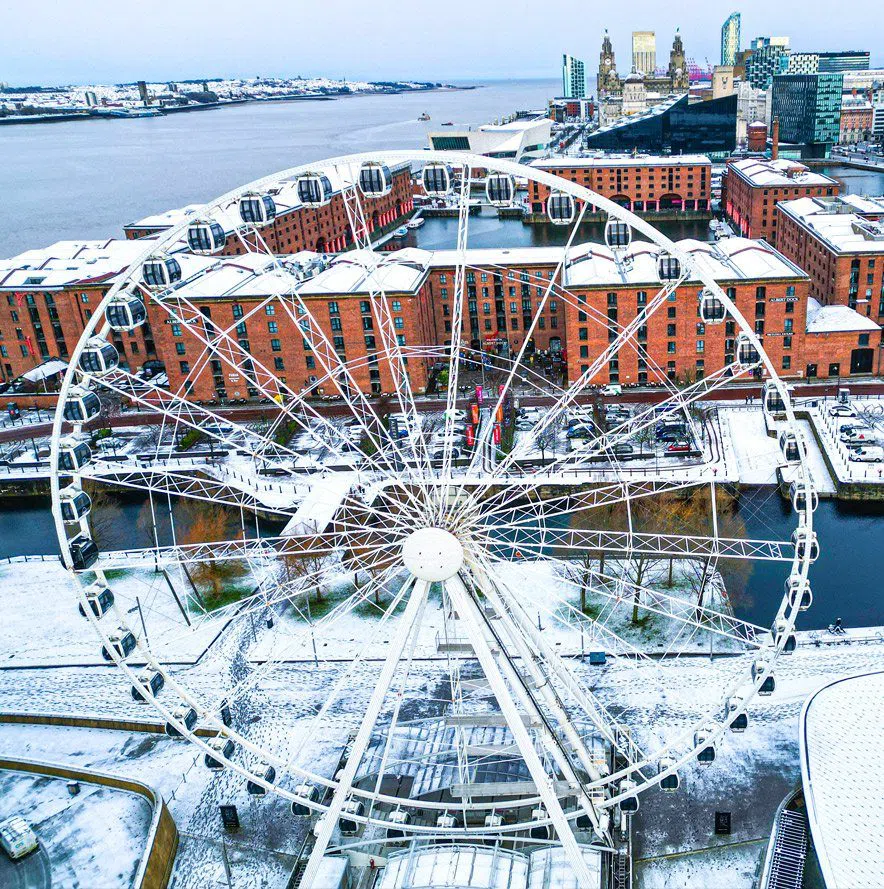
Fifty minutes on the river
Seeing the dock wall from the water changes your sense of the scale of it, and the Mersey Ferries River Explorer Cruise (Pier Head) is the way to do that in about 50 minutes. It is £14 adult, £9 child 5 to 15, £12.50 concession and £39 for a family of four, with under-5s free. There is walk-on capacity on every sailing and no door policy, and coach and school groups are taken with advance notice.
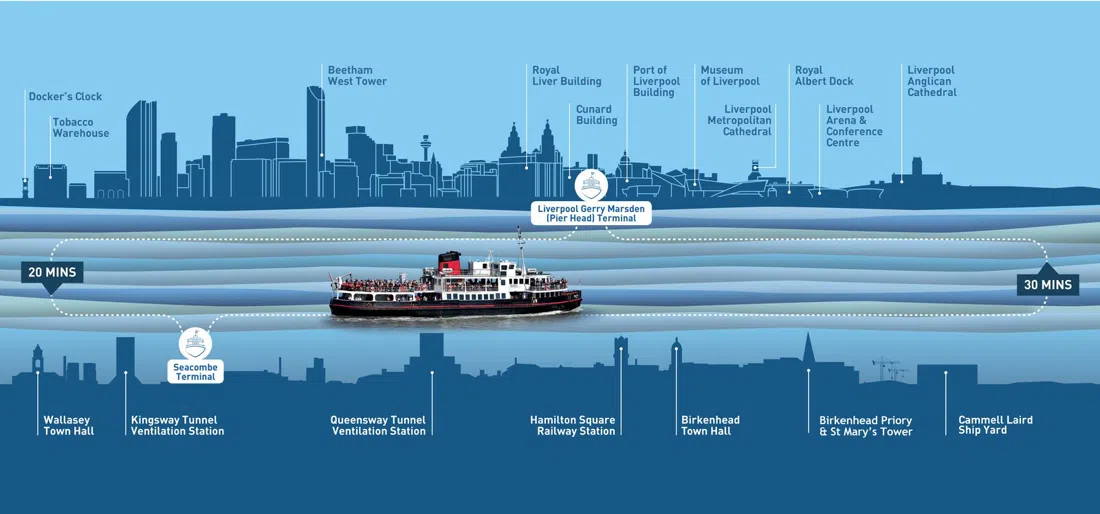
This is the most October-sensitive timetable on the waterfront. Weekend sailings run hourly from 10am to 6pm only until 4 October 2026. From 10 October to 1 November they run 10am to 4pm. From 7 November the last departure is 3pm. An afternoon plan built on a summer timetable will leave you watching the boat go.
Music museums and a single room of photographs
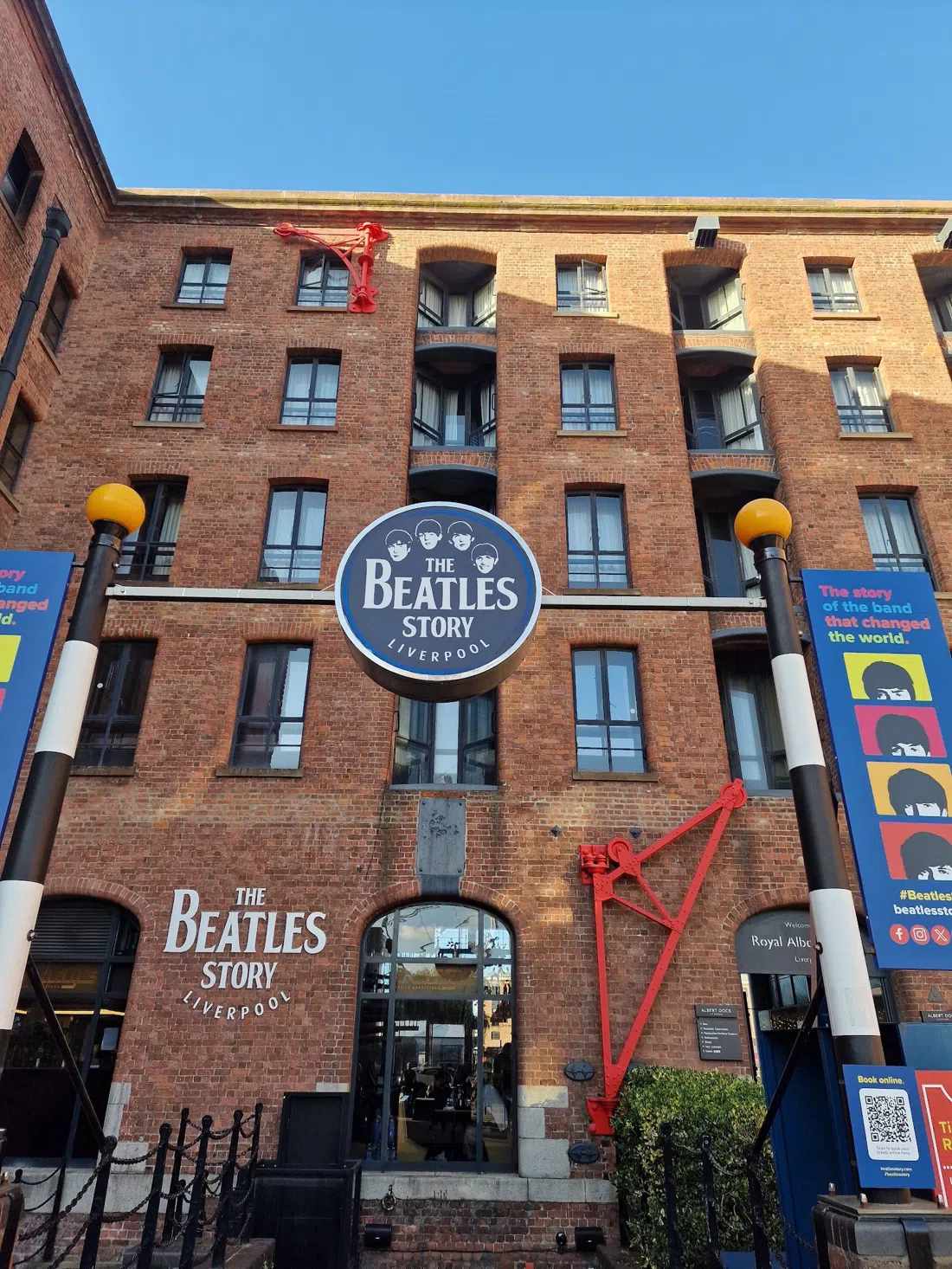
The Beatles Story (Royal Albert Dock, in the vaults under the quay) is the one paid attraction inside the dock that earns its ticket, and its October hours matter more than anything else here. It drops to winter hours from 5 October 2026: Sunday to Friday 9am to 5.30pm with last entry at 4.15pm, Saturdays and local half-term 9am to 6.30pm. An afternoon arrival can miss it entirely. Admission is £20 adult, £16 concession, £11 for a child aged 5 to 15 and free under 5, including the audio guide and both cafés and stores. It is card only, with no cash on the door. The guide comes in 12 languages, which makes it the easiest venue here for a party arriving from several countries at once, and groups of 10 or more get discounted rates through a dedicated travel-trade desk at [email protected].
If your interest in music runs wider than one band, British Music Experience (Cunard Building, Pier Head) is the sensible second stop. It opens Wednesday to Sunday only, 10am to 5pm with last entry at 4pm, so a Monday or Tuesday visitor will find the doors shut. Online pricing is £20 adult, £12.50 child, £52.50 family; walk up and it is £22, £14.50 and £58.50, which is a concrete reason to buy ahead. The ticket then stays valid for a full year. Groups of 10 or more adults can arrange a discount at [email protected].
Open Eye Gallery (Mann Island) costs nothing, takes five minutes, and is the only gallery in North West England devoted to photography. It is a single modest room, so school and coach groups are better taken in waves. It opens every day except Monday, and 'New Faces, New Focus' runs from 18 September to 20 December 2026.

Thirteen light works and the week that makes October
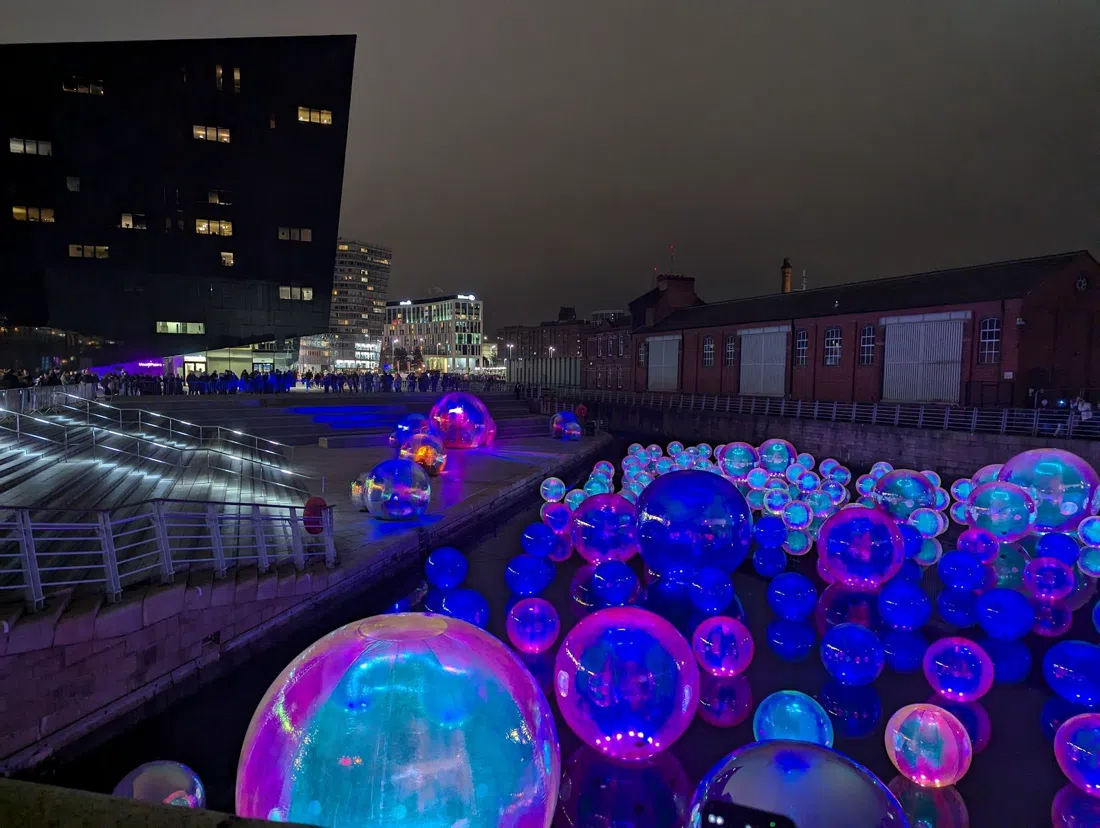
What makes this month worth choosing over any other is River of Light (Pier Head, Royal Albert Dock, Mann Island, Williamson Square and St Paul's Square). Thirteen illuminated artworks by international light artists are sited along the waterfront and into town on the theme 'Together', running 23 October to 1 November 2026, daily from 5pm to 9pm. It is free, unticketed and outdoors, so it absorbs any size of group, but the first hour is the busiest and road closures apply around the waterfront. Come at half past seven rather than five and you will still get the brick lit from below, with half the crowd. Reflections in the dock basin are the whole point, so pick a still evening if you have a choice of nights.
When the weather comes in off the river
October here is not cold so much as horizontal, and the dock has two genuine answers. Escape Hunt Liverpool (Royal Albert Dock) is the strongest group venue on the estate: six rooms built for teams of two to six, open 10am to 10pm daily, with parties above six booking parallel rooms on one reservation. Each quest runs 60 minutes with about 90 minutes on site, there are packaged stag, hen, corporate and school-trip options, three outdoor City Hunt trails for drier days, and 10% off bookings that start before noon Monday to Thursday.

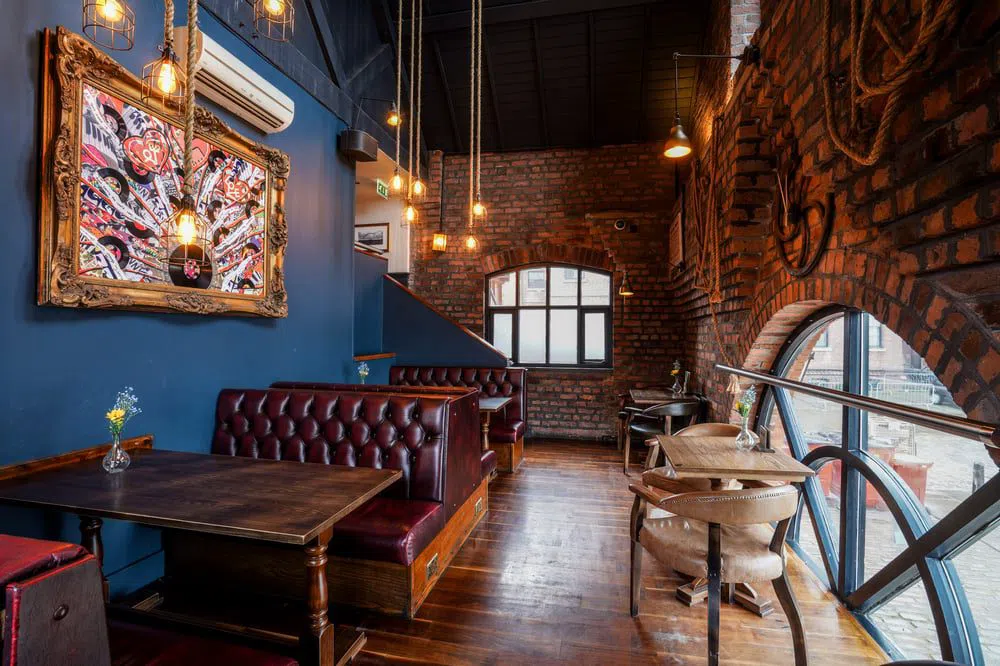
The Pump House (Royal Albert Dock) is the other shelter, and it is worth going in for the building. It is an 1874 steam hydraulic pump house that drove the dock machinery, converted to a pub in 1984, with three levels of varied seating that absorb a large group. Walk in, no door policy, food through the day, open daily 11am to 11pm, standard pub pricing.
Eating on the quayside and 15 minutes inland
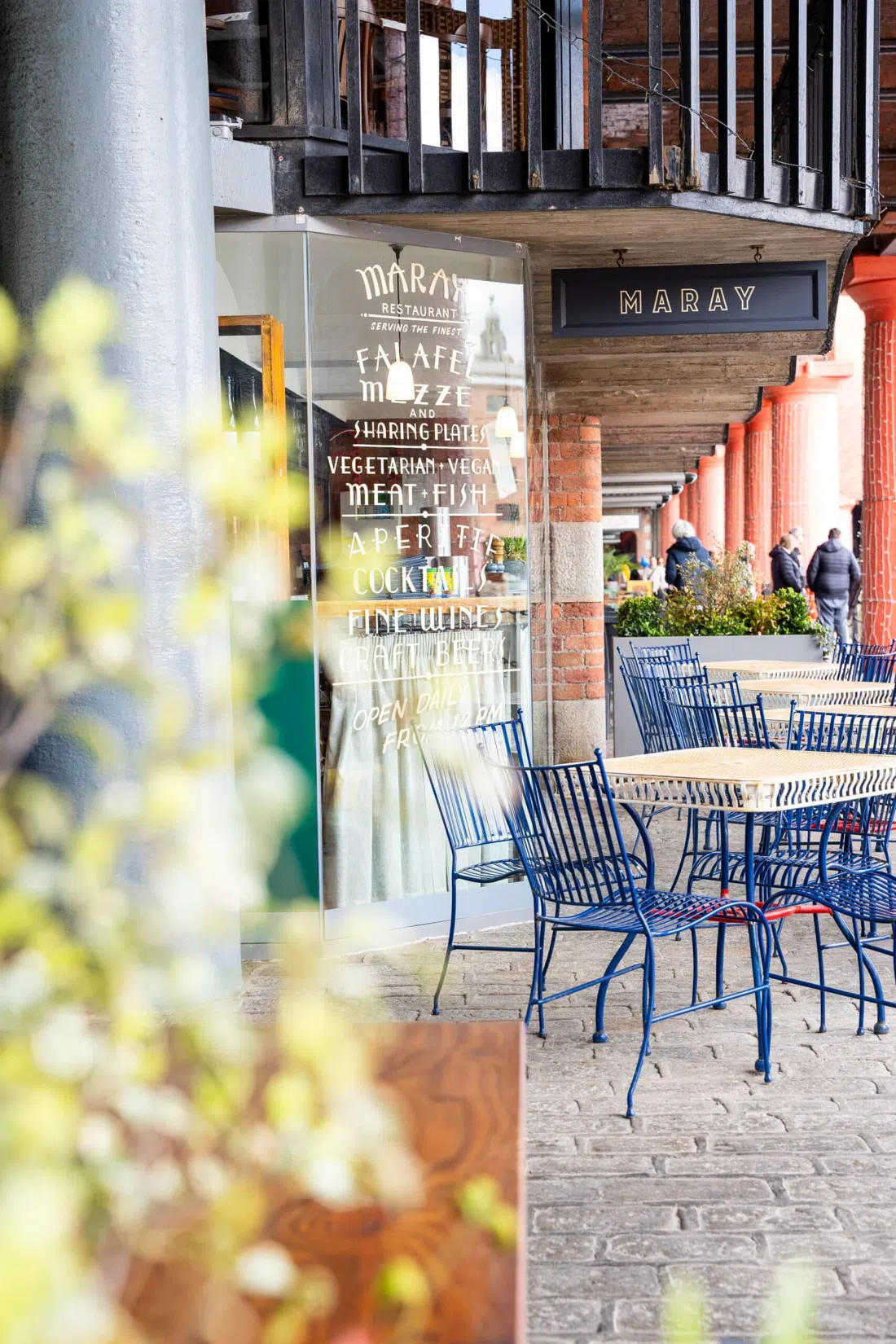
Maray Albert Dock (Royal Albert Dock) is the best independent cooking inside the dock rather than merely near it: Middle Eastern small plates, three or four per person, with vegan, vegetarian and gluten-free built into the menu rather than bolted on, which suits a mixed-diet table. There is an upstairs private dining room for 18 to 24 with its own bathroom and dock views, plus full exclusive hire. Walk-ins are welcome but book at peak. Note the hours: noon to 9pm Sunday to Thursday, noon to 9.30pm Friday and Saturday. This is an early dinner, not a late one.
Lunyalita (Royal Albert Dock) is a family-run Liverpool-Catalan independent occupying a Grade I listed warehouse bay, with 90 covers inside, 30 on the terrace, a purpose-built private dining and meeting room upstairs, and regular paella and wine tastings that work well as a group booking. The deli half gives people something to buy as well as eat. Use the terrace while October still has a usable afternoon.
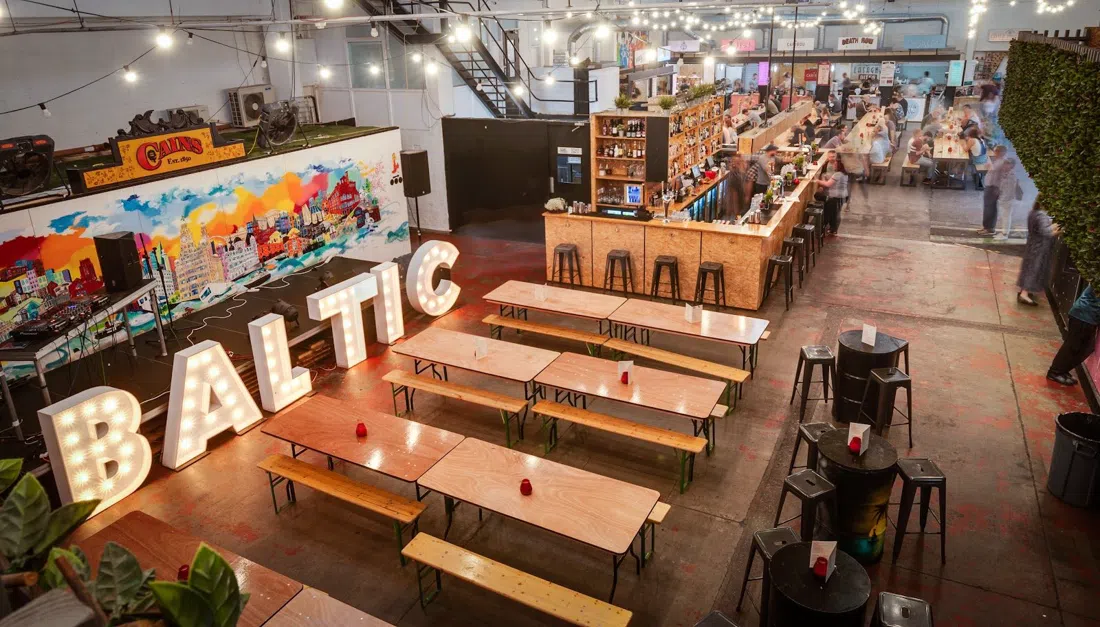
For the pay-off, walk 15 minutes inland to Baltic Market (Baltic Triangle), a street-food hall where you order by QR code at the table or at the stall and eat cheaply on shared benches. It is walk-in only with no bookings, which is brilliant for a group that wants to eat differently in one room and risky for a large group turning up at Saturday peak. Open Wednesday and Thursday 5pm to 10pm, Friday noon to 11pm, Saturday 11am to 11pm, Sunday 11am to 9pm, with DJs from around 7pm at weekends. It is dog friendly, with indoor and outdoor tables. By this point you are in the city rather than on the waterfront.
Paying at the door or booking ahead
The dock itself needs no ticket, ever. What needs forward planning is anything with a timed slot or a shrinking winter timetable: the tower tour, the ferry, and the museums that now close two days a week. For the rest, turning up works.
A guided option exists if you would rather be walked through the waterfront and the city's music history by someone who knows it, and the guided tours attached to this page carry 15,539 traveller reviews between them, with the top one rated 4.9 out of 5 from 10,158 reviews. They run seven days a week, which is useful in a month when individual venues do not. Prices start from around 30 USD per person. The trade-off is that a guided walk buys you context and a route, not access. The quaysides are free regardless, and nothing you pay for will get you past a closed museum.
Access, rules and who the dock suits
The quaysides are flat, wide, and largely cobble-and-flag underfoot, which is fine on wheels but noisy on them. The step-free star is the Museum of Liverpool, with lifts to every floor. The hard no for wheelchair users and for anyone with knees is Royal Liver Building 360, with its 124 stairs and no lift; the wheel has two capsules with ramps and extra-wide doors instead. Under-5s are not admitted to the tower at all but go free on the ferry and at the Beatles Story.
Couples get the most from the early walk, the photography room and an early small-plates dinner. Groups do best where the building can absorb them: the pub's three floors, the escape rooms' parallel bookings, the private dining rooms upstairs at the two independents. Groups do worst in the small places, the single-room gallery and the little café in the Colonnades, where the problem is fit rather than welcome. They simply will not get everyone in.
Is it worth it in October
Yes, with one condition: come for the dock, not for the museums it used to contain. As a free, Grade I listed piece of Victorian engineering you can walk through at dawn with a coffee, it is one of the best hours on any waterfront in the country, and October gives you flat water, low light and a fraction of the summer crowd. As a museum campus in 2026 it is diminished and will be until 2028. If the River of Light dates line up with your trip, the answer moves from yes to easily yes.
Best time to go
Early morning for the architecture and the reflections, between 9am and 10am, before the first coaches. Midweek for everything else, and specifically avoid Monday, when the city museum, the photography gallery and the second music museum are all shut, and Tuesday, when the music museum still is. Pick any date between 23 October and 1 November 2026 if you want the light trail as well as the dock, and arrive at the trail after half past seven rather than at opening. Remember that the clocks go back on 25 October 2026, after which it is dark here before five, which means the wheel and the light trail become the evening, and anything with a last entry needs doing before lunch.
Practical notes
James Street on the city rail network is a five-minute walk from the dock's north-west corner; Liverpool Lime Street is about 20 minutes on foot through town. Dockside and multi-storey car parks nearby charge by the hour, so for a day trip the train is both cheaper and closer. Bring a waterproof rather than an umbrella, because the wind comes straight off the river and umbrellas lose. Carry a card as well as cash, since the Beatles Story is card only on the door and the street-food hall orders by QR code. On a free day, the loop, the gallery, the photography room and the city museum cost nothing at all; a fuller day with the tower, the ferry and the Beatles Story lands near £50 a head before food. For somewhere to sleep within walking distance of the quay, start with Liverpool hotel search, and book early if your dates fall inside the light-trail window.