The Liverpool issue
Liverpool on the Water: The Docks, the Three Graces and a City Reborn by the Mersey
A calm, practical walking guide to Liverpool's waterfront in 2026 — the Grade I docks, the Three Graces, the river cruises and the regenerated northern quays, with real timings and honest advice on what suits groups and what suits couples.

By Ola ZielinskaMade Liverpool home after twenty other cities
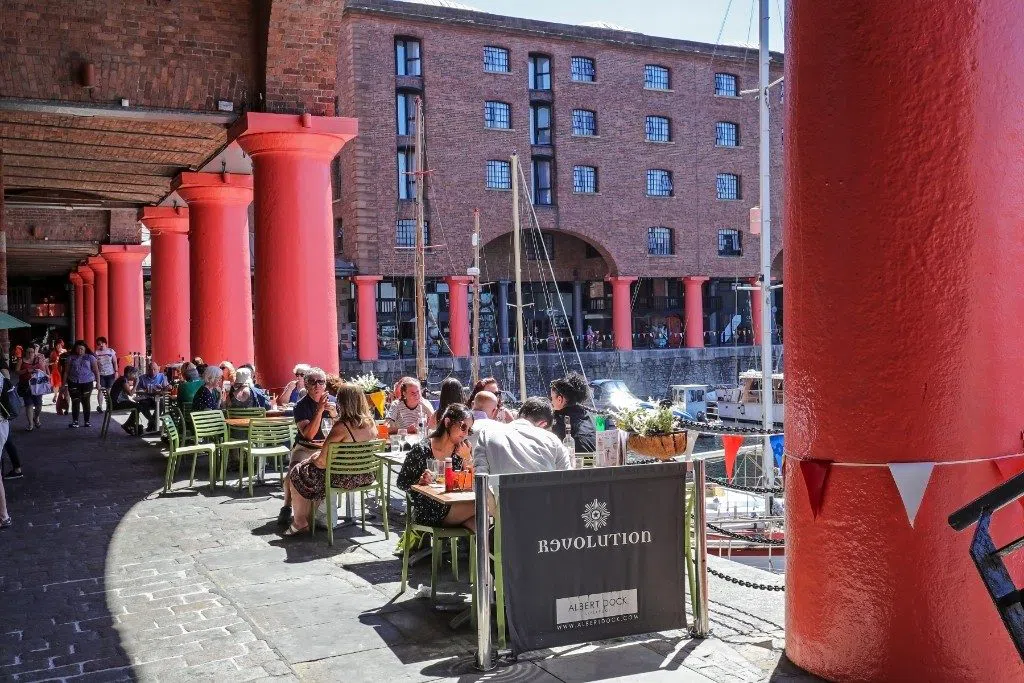
The Mersey does not flatter Liverpool so much as explain it. Stand on the quayside at Pier Head on a grey afternoon and the whole logic of the place lays itself out: the tide that built the docks, the docks that built the warehouses, the warehouses that now hold museums and rooftop bars instead of cotton and rum. This is a city that faces its river squarely, and the best way to understand it is to walk the water's edge from the old heart of the docks northward to the quays being rebuilt right now, in 2026.
What follows is a route, not a checklist. Everything below sits within a long, mostly flat waterfront stroll, and I've grouped it the way you'd actually plan a day or two — south to north, from the Grade I listed core to the new docklands. Book your bed near the front and you can do most of it on foot; a Liverpool hotel search will show you the cluster around the Strand and the docks that keeps you closest to the water.
Start at the Albert Dock: the Grade I heart
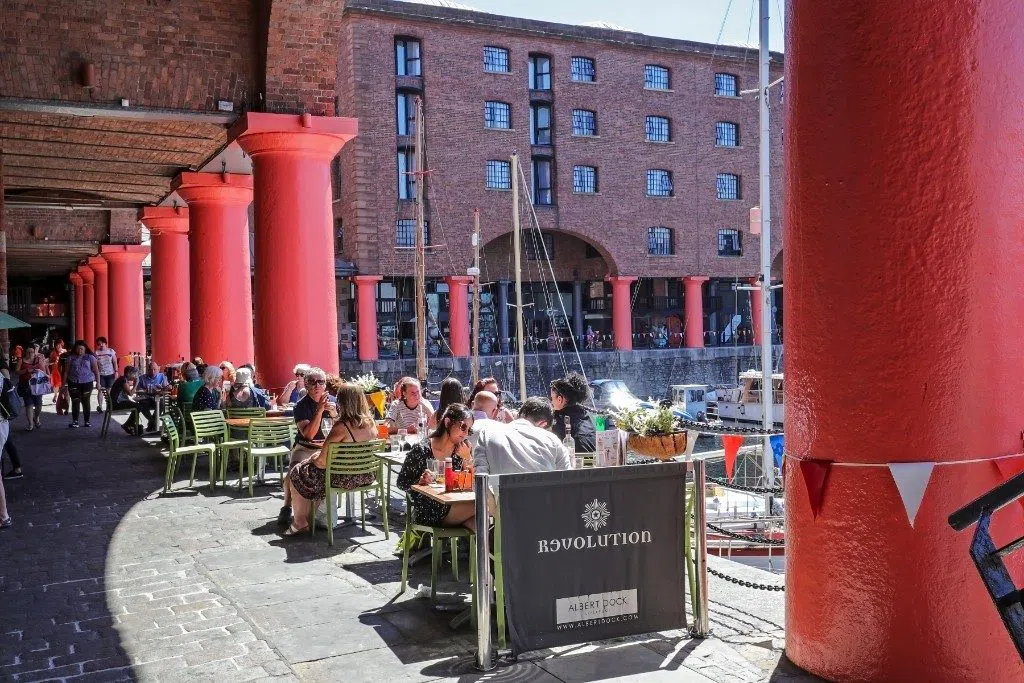
Everything begins at Royal Albert Dock Liverpool (Waterfront, a five-minute walk from the city centre). It is the UK's largest group of Grade I listed buildings, a colonnade of red-brick warehouses wrapped around a rectangle of still dock water, and the quayside is open, free and yours to wander at any hour. You don't book the dock; you book the things inside it. Come early if you want the water mirror-flat and the crowds thin — by late morning in summer the central quay fills with families, buskers and tour groups, and the mood shifts from contemplative to carnival.
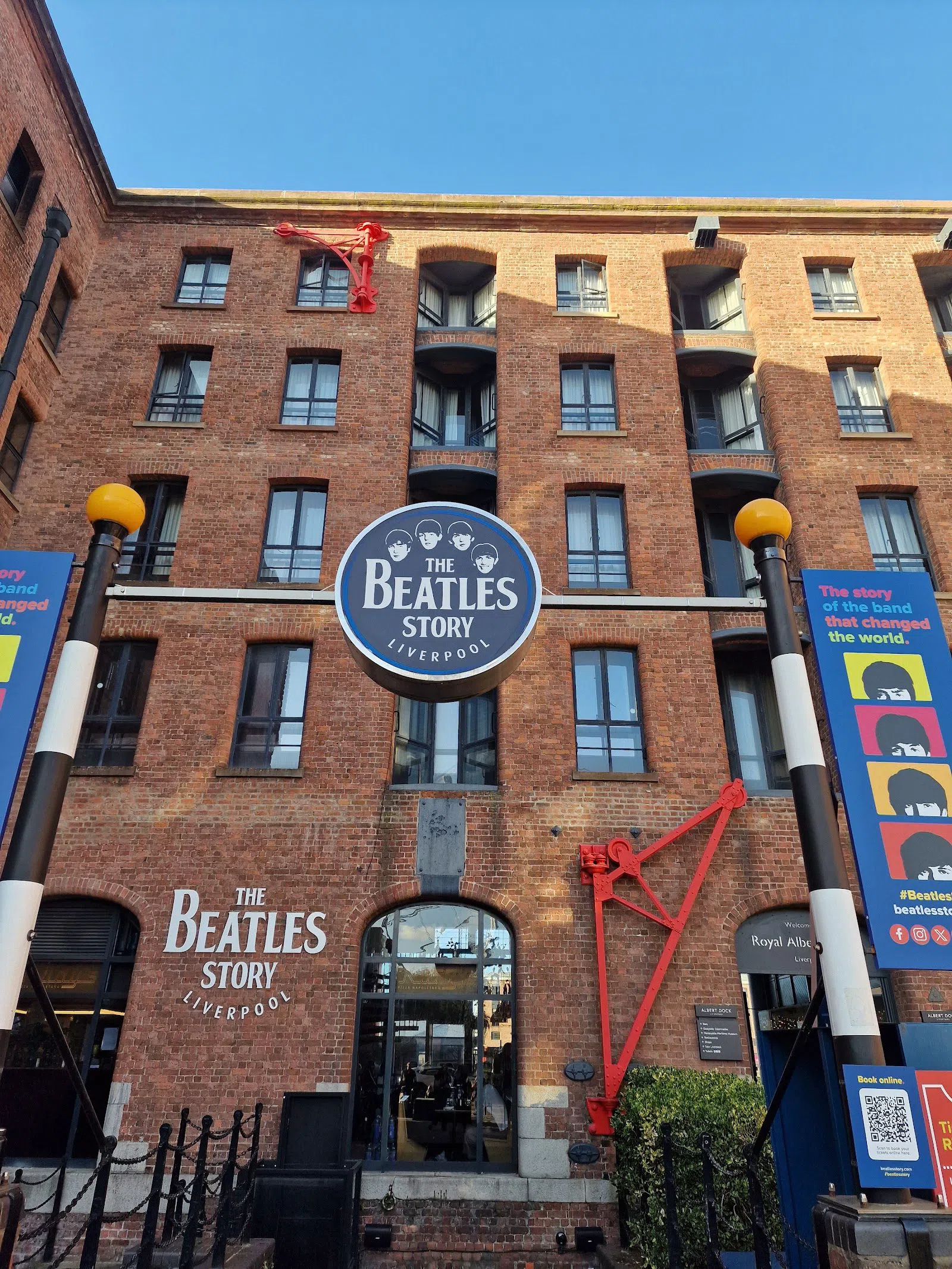
The obvious anchor here, and the one that pulls the international crowd, is The Beatles Story (Albert Dock quayside). It is the world's largest permanent Beatles exhibition, set right on the dock, and it works on a timed-entry ticket you should book ahead in peak months. New for 2026 there's a two-hour VIP tour (from January, around £170 per person) for people who want depth rather than a lap of the standard exhibition — worth it for a serious fan, overkill for a family just filling an afternoon. Group rates exist; ask when you book rather than at the door. I'll say the honest thing a Liverpool writer should say: the city is far more than four musicians, and if the Beatles aren't your reason for coming, you can skip this without guilt and lose nothing of the waterfront's real story.
When you want lunch without leaving the colonnade, Maray Albert Dock (Albert Dock waterfront unit) does Middle Eastern–inspired sharing plates — its Disco Cauliflower is the signature, and the sharing format is forgiving of a mixed group who can't agree on anything. It takes bookings, and I'd make one for a weekend; walk-in at 1pm on a Saturday is optimistic. This is a good-value, relaxed lunch rather than a special-occasion dinner, and it suits couples and small parties equally.

Plan your Liverpool trip
Live prices from our booking partners.
Free cancellation on many rooms. We may earn a commission when you book.
The city's own story, indoors and free
A short walk along the front from the dock brings you to Museum of Liverpool (Pier Head). With the Maritime Museum and the International Slavery Museum both closed for redevelopment until roughly 2028, this free, four-floor museum is currently the waterfront's main indoor culture stop — and it carries that weight well, telling the city's history from the docks and the port to music, migration and football. Entry is free and you can simply walk in; some special exhibitions are bookable, and groups are welcome. Give it a proper ninety minutes. It's also your best wet-weather insurance on the waterfront, and I'd hold it in reserve for the hour the Mersey decides to rain sideways, which it will.

The Three Graces and the Pier Head skyline
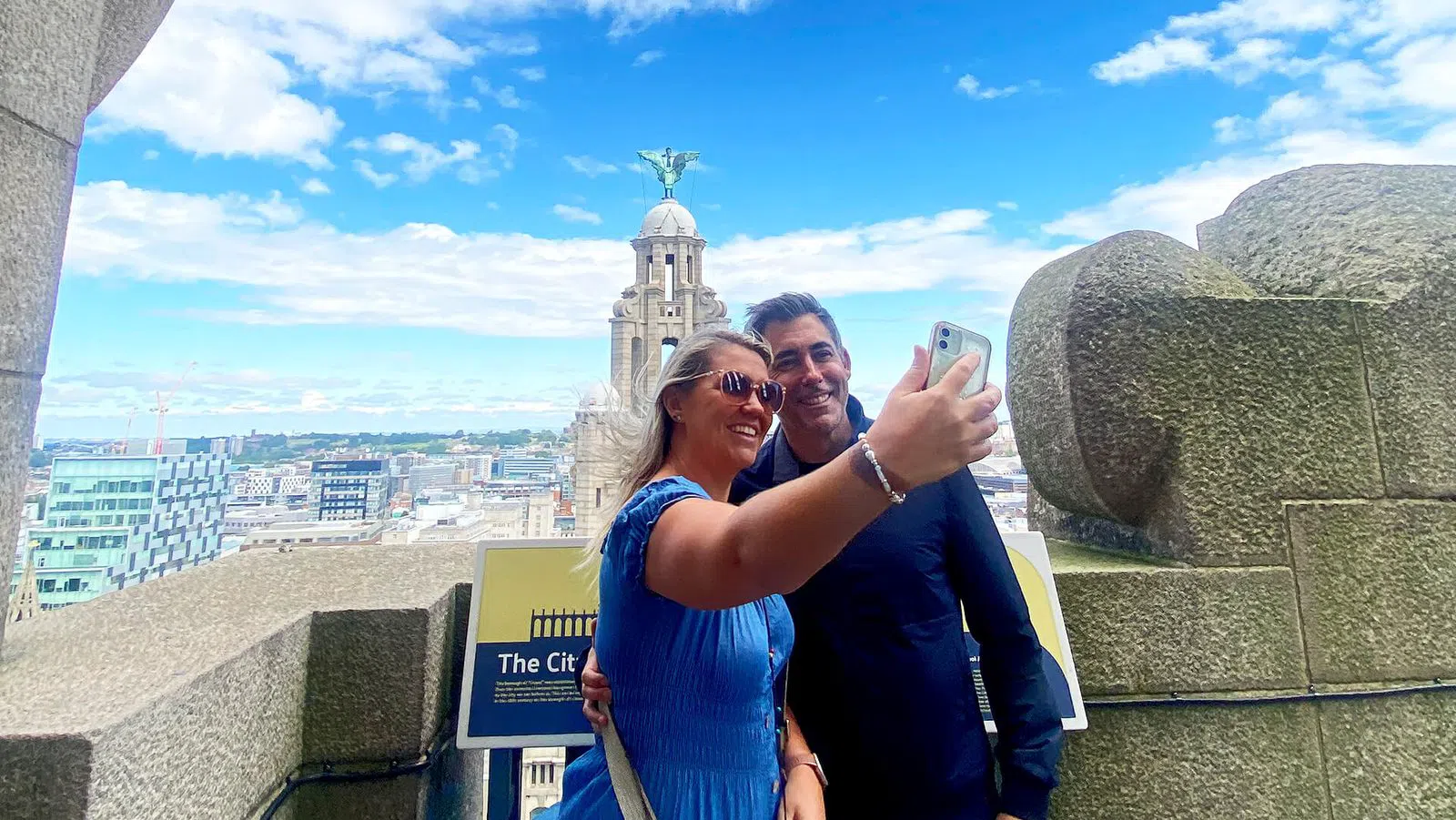
The three great buildings standing shoulder to shoulder at Pier Head — the trio Liverpool calls the Three Graces — are the postcard, and the most famous of them opens its doors. Royal Liver Building 360 (Pier Head) runs guided, timed-entry tours up the clock tower, and for 2026 there's a new interactive video-wall exhibition inside. The tour is a step up in price from the walk-up attractions (it's a ££ ticket, booked ahead) and it rewards you with the definitive view down the river and back over the city. Group and private bookings are available. This is a proper tour with fixed slots, not a drop-in, so plan it into your day rather than hoping to squeeze it.
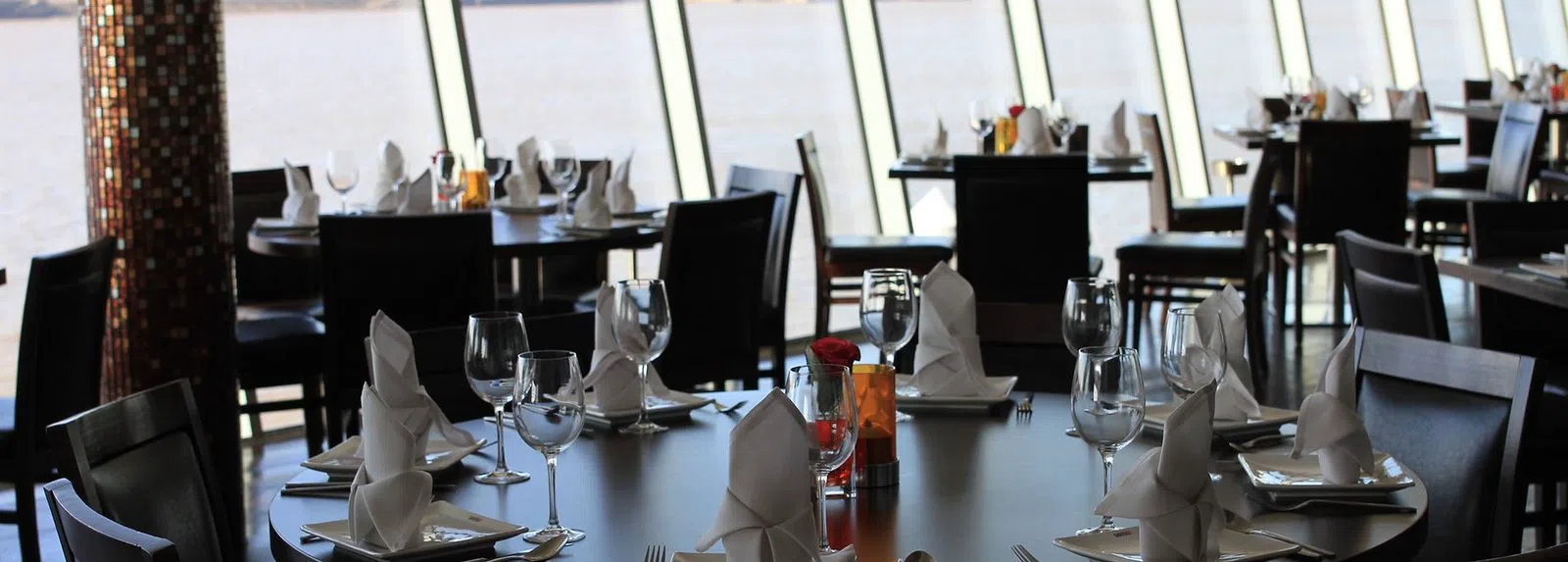
For the same skyline with a drink in hand, Pier Head has two rooftops worth knowing, and they're different animals. Matou (Pier Head, at the Mersey Ferries terminal) is a pan-Asian restaurant and bar whose roof terrace is arguably the closest dining terrace to the water in the city, with the Three Graces filling the view. The terrace seats around 300 and there's a private lounge for 70, so it genuinely handles large groups — but that popularity means it books up fast in summer, and a terrace table on a warm evening is not a walk-in proposition. Reserve.
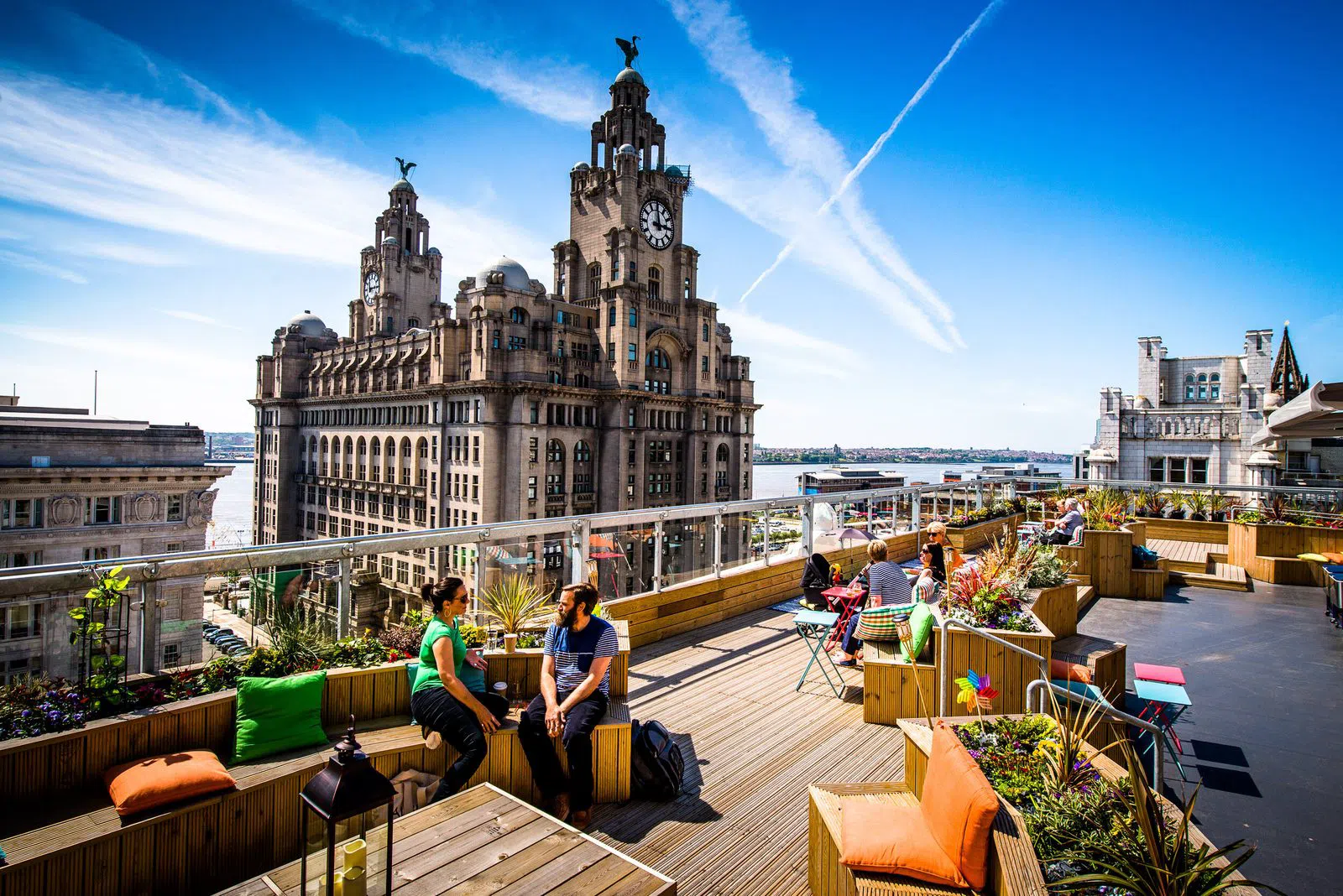
Goodness Gracious Roof Garden (city centre, a short walk back from the front) is the more casual counterpoint: a seasonal rooftop, roughly March to September, with one of the best free-standing views of the Three Graces from behind. You can walk in for drinks, or book for afternoon tea and groups. The honest caveat is in the name of the season — it's weather-dependent and open-air, so it's a glorious plan on a clear evening and a non-plan in a downpour. Have a fallback.
Onto the river: the only way to see the whole front
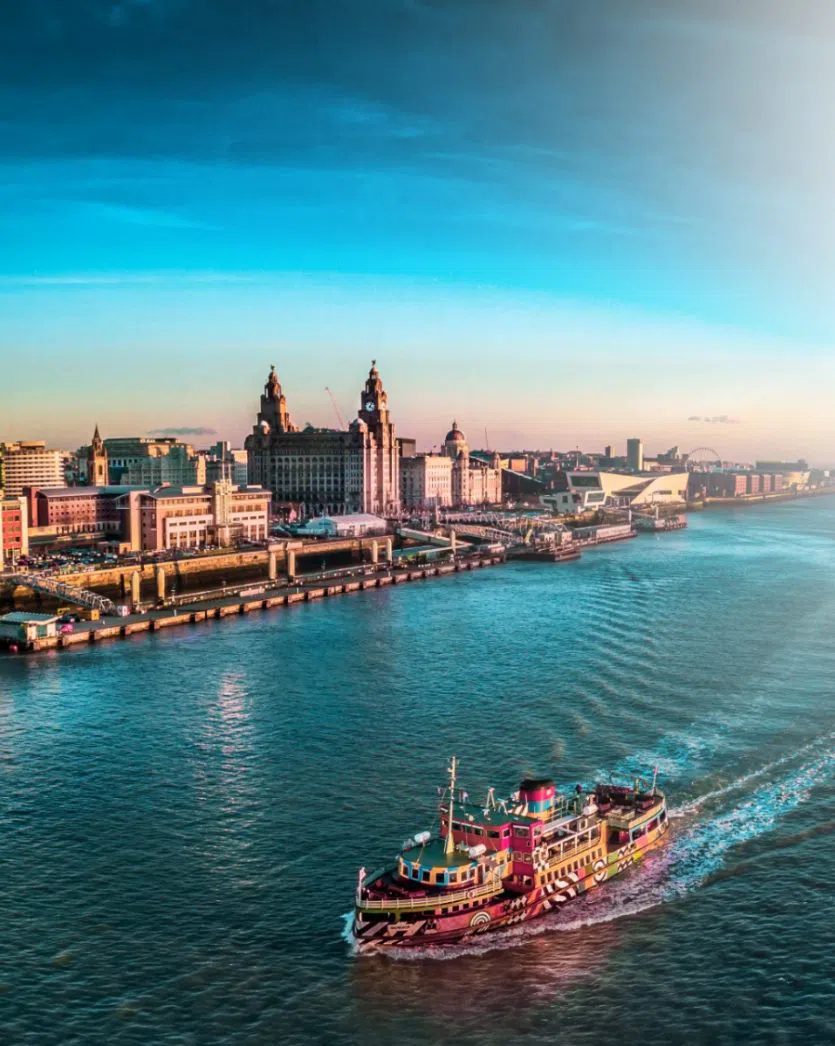
You cannot really read Liverpool's waterfront from the land, because the land is where you're standing. Get on the water. Mersey Ferries — River Explorer Cruise (departing Pier Head) is the definitive way to do it: a roughly 50-minute cruise, around £13 for an adult, with hourly departures and — new from February 2026 — a free digital audio guide that talks you through the front as it slides past. You can walk on or pre-book, and it comfortably handles coach groups and private charters, which tells you it's a well-oiled operation rather than a fragile little launch. This is the single ride I'd insist a first-timer take. Go for the crossing to the far bank and back and you'll finally see the docks, the Graces and the new northern quays as one continuous story.
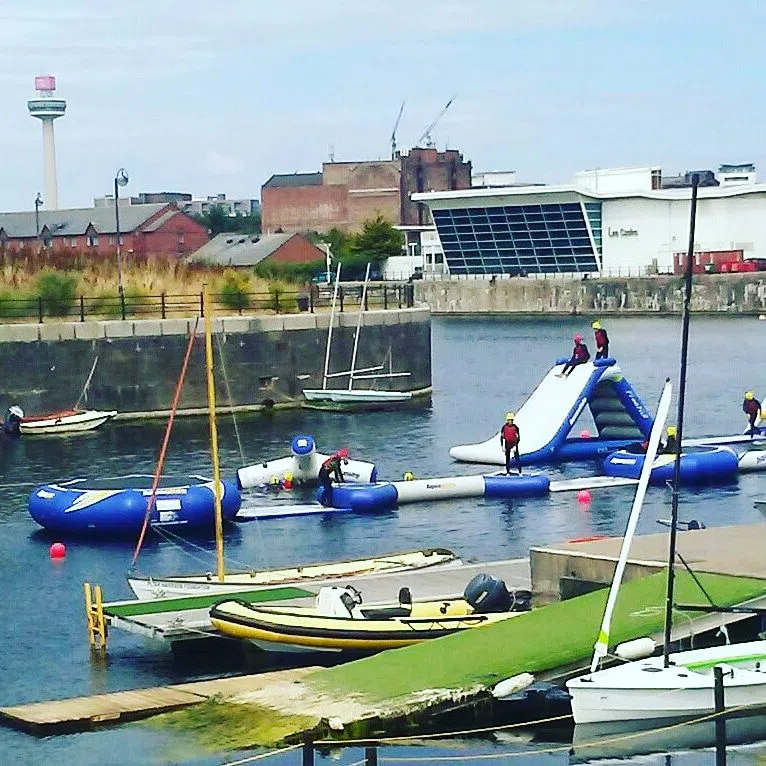
For hands-on-the-water rather than a deck rail, Liverpool Watersports Centre (Queens Dock, just south of the Albert Dock) is the best activity option in the centre. The dock is sheltered, which makes stand-up paddleboarding and kayaking genuinely safe for beginners and big groups — it's built for stag and hen parties, kids' clubs, birthdays and corporate sessions, so it's a group-first venue rather than a quiet couples' outing. Book a session ahead; this isn't something you drift into on a whim.
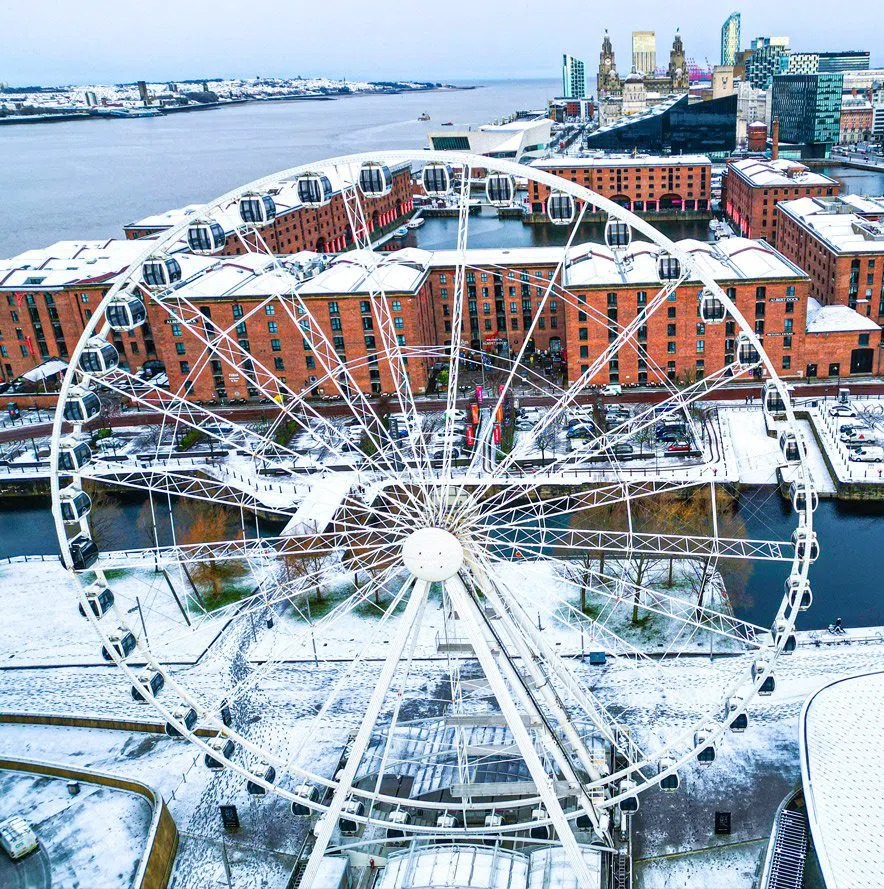
And if you've an hour to kill or children to keep happy, Wheel of Liverpool (beside the Albert Dock) is the weatherproof filler: a 10-to-12-minute panorama, around £13 an adult, walk-up, with whole-gondola and group tickets if you want privacy. Nobody comes to Liverpool for the wheel, but it's a painless, sheltered way to buy a view when the terraces are rained off.
North to the docks being reborn
The most interesting thing happening on this waterfront isn't the old core — it's the northern docks, which are being rebuilt in real time, and 2026 is a good year to watch it. Walk or take a short cab north from Pier Head and the character changes from polished tourism to working regeneration.
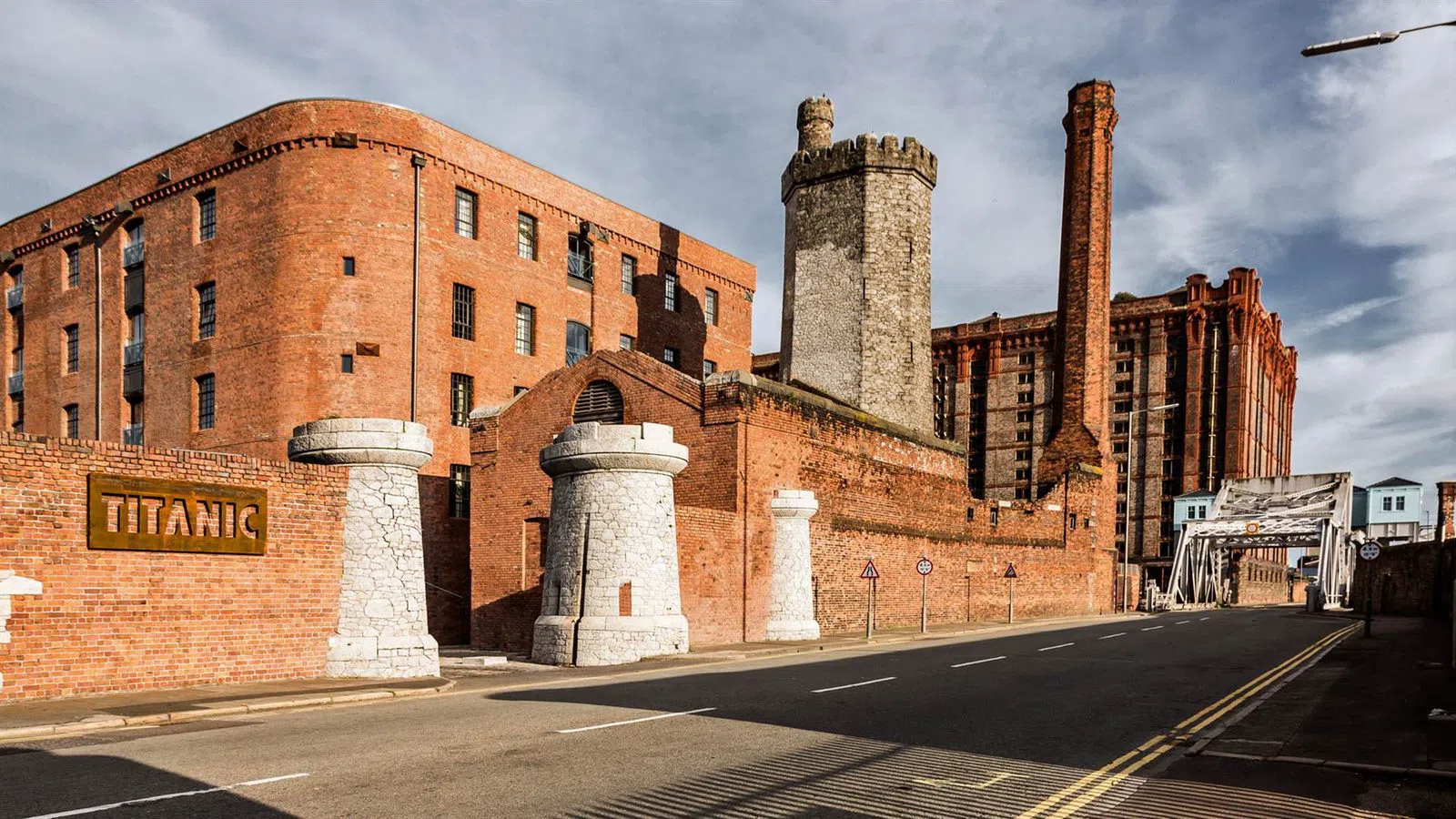
Titanic Hotel & Rum Warehouse (Stanley Dock) is the anchor here: a striking conversion of the historic northern dock warehouses into a hotel and events complex. The Rum Warehouse and West Bay host large functions, so this is a place built for groups and celebrations — but the quieter reward is the Rum Bar overlooking Stanley Dock, which is one of the genuine hidden-gem waterfront drinks in the city. It's a ££–£££ spot, more of a destination than a passing pint, and worth the walk north precisely because it isn't heaving with day-trippers. A couple could have a very good, unhurried evening here.
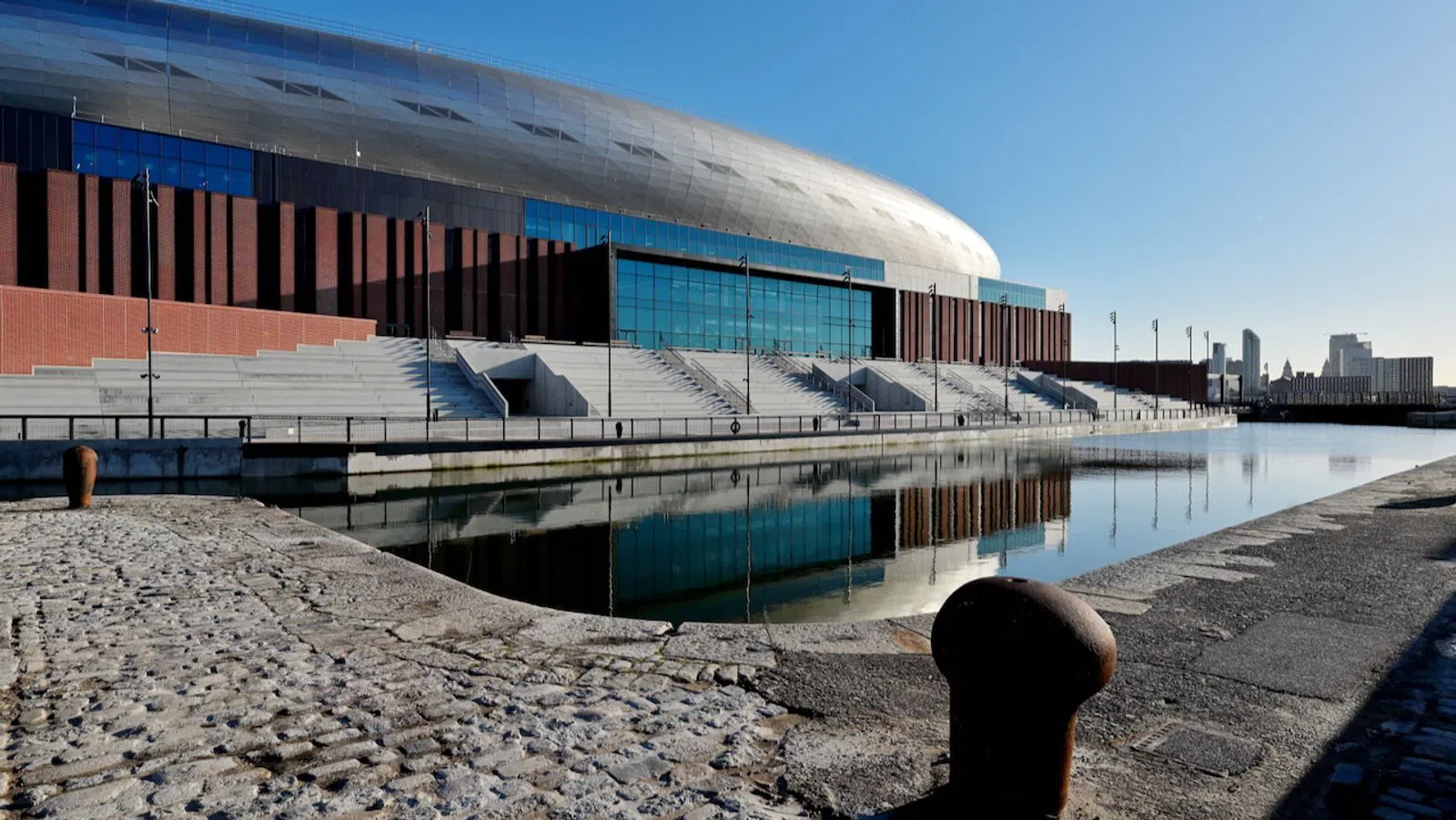
Further along the regenerated docklands stands the landmark of the whole northern push: Hill Dickinson Stadium (Bramley-Moore Dock), Everton's new ground, opened in 2025 and recently renamed under a naming-rights deal. It runs matchday visits and stadium tours, with group tour bookings rolling out through 2026 — but because both the tour programme and the name are new, verify tour dates and prices before you build a day around it. Tours are a ££ ticket; matchday is £££ and a different proposition entirely. Even if you never go inside, the stadium rising from a filled-in dock is the clearest single image of what this stretch of river is becoming.
How to plan the two ends together
The waterfront splits neatly into two halves, and I'd give each roughly half a day. The southern half — Albert Dock, Pier Head, the Graces, the ferry and the wheel — is dense, walkable and doable on foot in an afternoon. The northern half — Stanley Dock and Bramley-Moore Dock — is a deliberate expedition, best paired with a short taxi hop and a drink at the Rum Bar to reward the effort. Slot the Mersey Ferries cruise in the middle of the day when the light is best, and keep the free Museum of Liverpool as your rain plan. For the wider city beyond the water — the cathedrals, the Georgian quarter, the Baltic Triangle — the Liverpool guide picks up where the river leaves off.
Practical notes
Getting there and around. The waterfront is a flat, continuous walk from the city centre and Liverpool Lime Street station — the southern cluster from Albert Dock to Pier Head is entirely on foot. For the northern docks, take a short taxi; it's walkable but longer and less scenic than the polished core. The Merseyrail underground loop and buses connect the centre if legs tire.
Cash and cards. Everything here takes cards; you won't need cash. Prices are in pounds sterling — the walk-up attractions (ferry, wheel) sit around £13 an adult, the tower tour and museums are a step up, and the rooftop restaurants are your bigger spend.
Timing. Come to the Albert Dock early for calm water and thin crowds. Take the ferry in good midday light. Rooftops — Matou and Goodness Gracious — are evening venues and need booking in summer; the roof garden is seasonal (roughly March–September) and weather-dependent, so always have an indoor fallback. Book The Beatles Story, the Royal Liver Building 360 tour and any watersports session ahead in peak months.
Budget shape. A frugal water-focused day — ferry, wheel, the free museum, a sharing-plates lunch at Maray — is very affordable. Add the tower tour, a Beatles ticket and a rooftop dinner and it climbs quickly. The two genuinely free pleasures — walking the Grade I dock and the Museum of Liverpool — are also two of the best, which is the most Liverpool thing about the whole waterfront.
Before you go
What is the best way to see the Liverpool waterfront?
On foot for the southern core — Albert Dock to Pier Head is a flat, continuous walk — combined with the Mersey Ferries River Explorer Cruise, a roughly 50-minute trip (around £13 adult) that shows the docks, the Three Graces and the northern quays as one continuous view. From February 2026 the cruise includes a free digital audio guide.
How much does it cost to visit Liverpool's waterfront attractions?
Walking the Grade I Royal Albert Dock and the four-floor Museum of Liverpool is free. Walk-up attractions like the Mersey ferry cruise and the Wheel of Liverpool sit around £13 an adult, while the Royal Liver Building 360 tour, The Beatles Story and rooftop dining are a step up in price.
Is the Liverpool waterfront good for groups or better for couples?
Both, but venues differ. Liverpool Watersports Centre, Matou's 300-seat terrace and the Titanic Hotel's Rum Warehouse are built for large groups. For a quieter couples' evening, the Rum Bar overlooking Stanley Dock and a booked table at Maray Albert Dock suit two better.
Can I visit the new Everton stadium on the Liverpool docks?
Yes — Hill Dickinson Stadium at Bramley-Moore Dock, opened in 2025 and recently renamed under a naming-rights deal, runs matchday visits and stadium tours, with group tour bookings rolling out through 2026. Because the tour programme and name are new, verify tour dates and prices before booking.
Which Liverpool waterfront attractions are worth visiting if it's raining?
The free Museum of Liverpool is the best wet-weather stop, with four floors on the city's history. The Beatles Story, the Royal Liver Building 360 exhibition and the enclosed Wheel of Liverpool are also weatherproof. Rooftop venues like Goodness Gracious Roof Garden are open-air and seasonal, so keep an indoor fallback.